



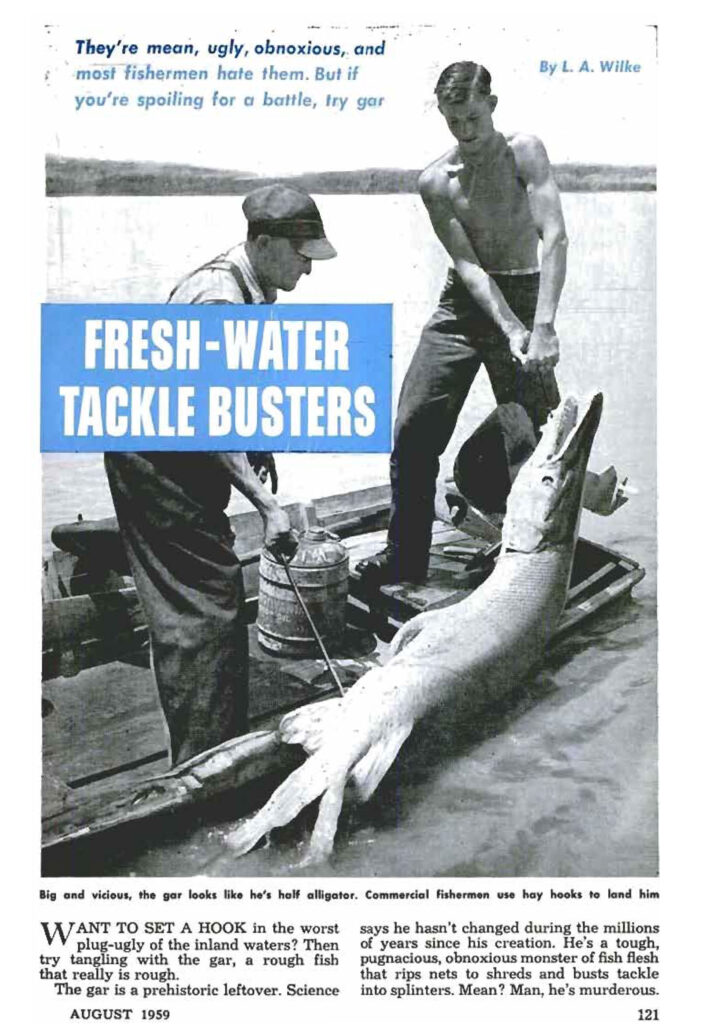
I have been collecting old pro- and anti-sucker and gar materials (as well as old scientific and less forcefully biased historical writing) for years and have written about some of them on this site. Every time I think I’ve probably found most of what has survived to be digitized, I find more. That was the case with “Fresh-water Tackle Busters,” an article published in Popular Mechanics (August 1959) and written to convince fishermen (because, well, it was 1959 and other than gravity there could be nothing so obvious as that no woman had or would ever be so outrageous as to do it) to fish for gar.
Like a lot of writing about “undesirable” organisms, the article paints gar as monsters, out of control and barely susceptible to the advancements powering our ongoing project to force the natural world to fit our needs and desires. What makes it better than other examples of this, which use fear and misinformation to create a sense that these [insert unprofitable/inconvenient organisms here] are dangers to our way of life and deserve extermination, is that it uses the usual “evidence” to make gar seem dangerous and edgy, even deviant, as a way of enticing the audience to imagine themselves fishing for them, though nearly none of them would ever come anywhere close.
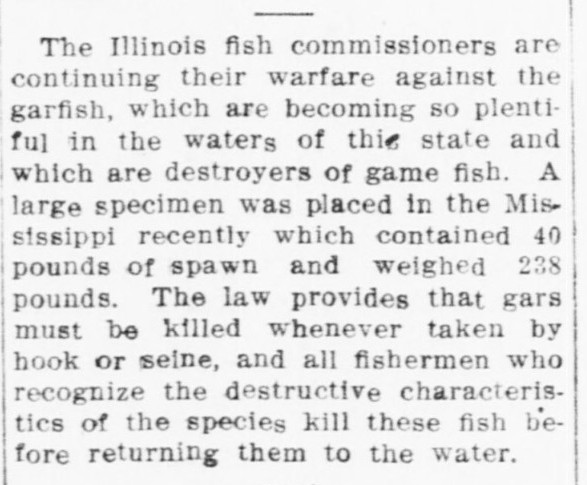
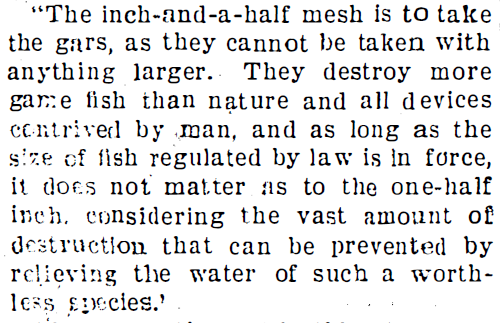
Around that time, newsstands were full of men’s magazines with words like “true” and “real” in their titles. Supposedly true stories were framed as cautionary tales of, for example, what could happen to innocent teenagers (usually girls) if they got caught up with drugs, gangs, rock and roll, fishing, or other bad influences. Lurid covers showing almost naked women implied that the stories inside were full of sex, but only because unflinching (and definitely true) reports on the immoral underbelly of society have to include all the details, no matter how unsavory. I doubt many readers believed any of it was true or that they would learn something that might save their own delicate daughters from terrifying fates, but I suppose they could pretend they believed their motives were pure. I tried to find the perfect cover to show this. I knew I’d never escape the ubiquitous misogyny, but figured at least one of them had to be usable. I looked at hundreds of them, and nearly every one that illustrated the point also featured racist caricatures, glorification of sexual assault, and TONS of Nazis. Often all at once. The art is frequently amazing, though, despite what it shows.
So here’s a relatively tame one, full of FACTS (America might not win!), SCIENCE (be afraid!) and TRUTH (space sex!). Not a single person saw this in the magazine rack and thought, “I’m very concerned about how the space race will impact our national defense. I should probably get up to speed on the facts and science so I can be an informed citizen.” (You can read more about this magazine here, but be forewarned: you won’t learn anything useful about the balance of power in space and you should be offended by at least something on the page.)

Popular Mechanics was not, overall, one of these sensationalist publications, but, judging by the covers (yeah, I know), it liked to use wild predictions about miraculous future inventions or terrifying future calamities on the cover to hook readers.
The gar fishing article below is by L.A. Wilke (1897–1984), a Texas outdoor writer, editor, printer, photographer, and, apparently, near-saint (https://tpwmagazine.com/archive/2011/oct/legend_wilke/). His only violation of any law was, he claimed, shooting a flock of wild turkeys out of season in the 1920s. As penance, he didn’t hunt them again for 40 years. As his gar article shows, he knew how to balance the sensational and the practical. It’s is full of terrifying, supposedly scientific, and mostly untrue details about the Alligator Gar, but also advises more sensibly on what kind of gear you might need. See how it bounces back and forth between thriller and how-to:
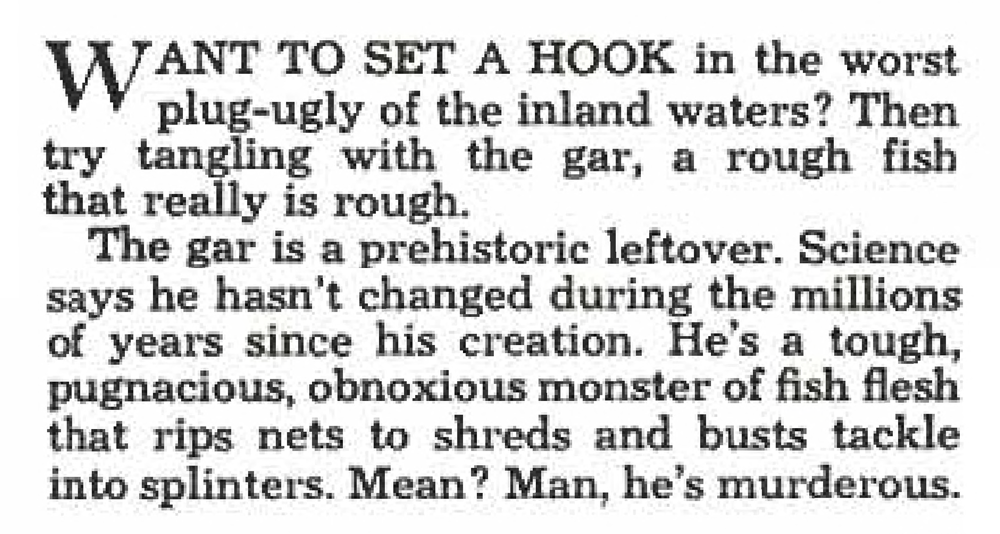
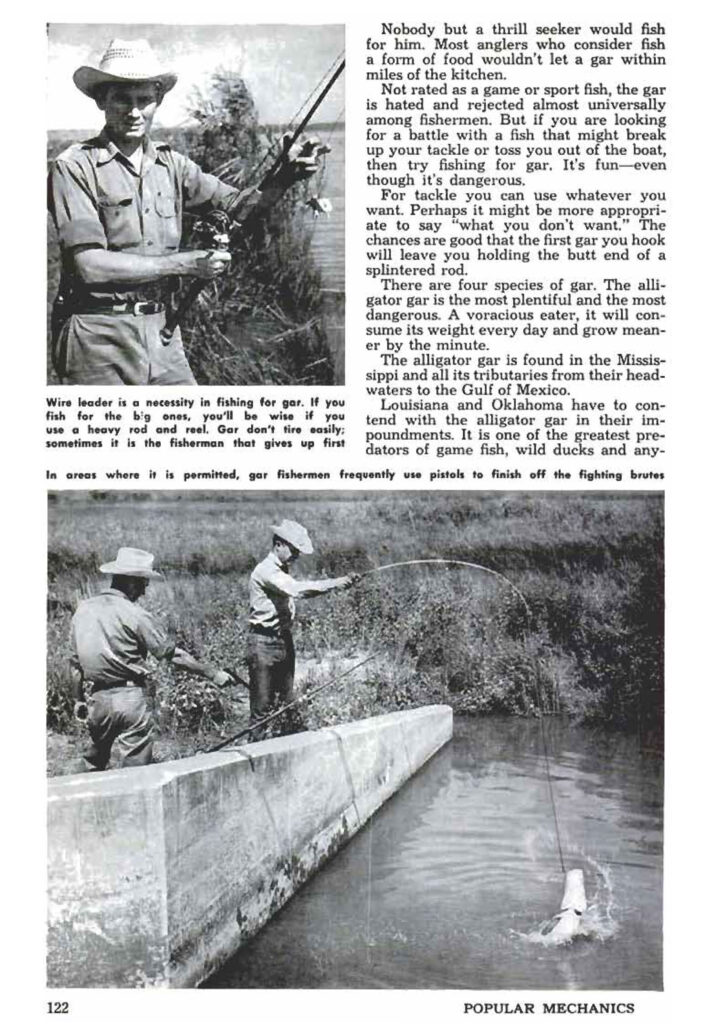
Nobody but a thrill seeker would fish for him. Most anglers who consider fish a form of food wouldn’t let a gar within miles of the kitchen.*
*He later says, on the same subject, “The meat is said to be delicious (if a person hasn’t seen the fish first). It finds a ready market among fish eaters.”
Not rated as a game or sport fish, the gar is hated and rejected almost universally among fishermen. But if you are looking for a battle with a fish that might break up your tackle or toss you out of the boat, then try fishing for gar. It’s fun—even though it’s dangerous.
For tackle you can use whatever you want. Perhaps it might be more appropriate to say “what you don’t want.” The chances are good that the first gar you hook will leave you holding the butt end of a splintered rod.
There are four species of gar. The alligator gar is the most plentiful and the most dangerous. A voracious eater, it will consume its weight every day and grow meaner by the minute.
There are long stretches of straightforward advice: what rod, reel, line, float, bait, etc. to use; how to find active gar; not to set the hook until the fish has really taken the bait. This is the most important detail to communicate to someone new to fishing for gar with bait, and I think it’s a pretty good indication that Wilke had actually chased these fish himself. He’d probably set the hook too soon a few times.
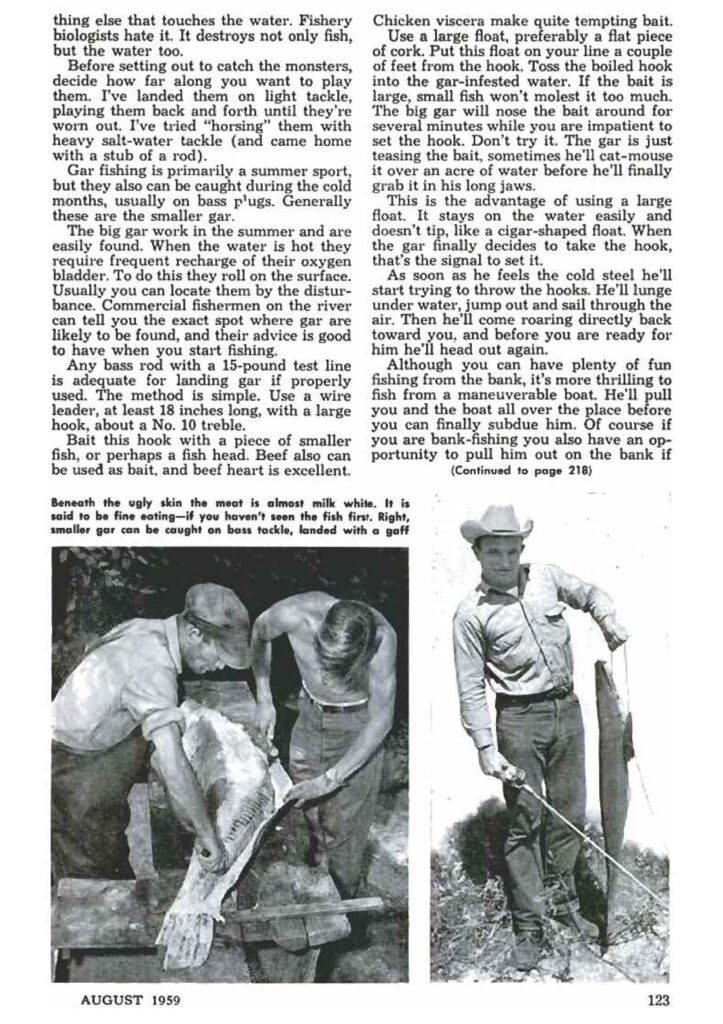
The big gar will nose the bait around for several minutes while you are impatient to set the hook. Don’t try it. The gar is just teasing the bait, sometimes he’ll cat-mouse it over an acre of water before he’ll finally grab it in his long jaws.
This is the advantage of using a large float. It stays on the water easily and doesn’t tip, like a cigar-shaped float. When the gar finally decides to take the hook, that’s the signal to set it.
As soon as he feels the cold steel he’ll start trying to throw the hooks. He’ll lunge under water, jump out and sail through the air. Then he’ll come roaring directly back toward you, and before you are ready for him he’ll head out again. Although you can have plenty of fun fishing from the bank, it’s more thrilling to fish from a maneuverable boat. He’ll pull you and the boat all over the place before you can finally subdue him. Of course if you are bank-fishing you also have an opportunity to pull him out on the bank if it slopes gradually to the water. Otherwise it is almost impossible to land him.
Exaggerated and more colorful than it needed to be, but this article is sort of a sales pitch, so it’s not surprising.
I was surprised to see an explanation of rope lures in the article. The details seem to indicate he’d used, or at least seen, them. I’ve caught lots of longnose gar on rope lures, and always heard they don’t work on any other species. I know that isn’t 100% accurate, since I have caught one shortnose that way. I’ve never heard of anyone using them for alligator gar. It’s entirely possible that Wilke simply didn’t think it mattered for this article to differentiate between the species one might encounter in the waters of his region, as most of his readers wouldn’t know enough about the subject to be aware of a difference.
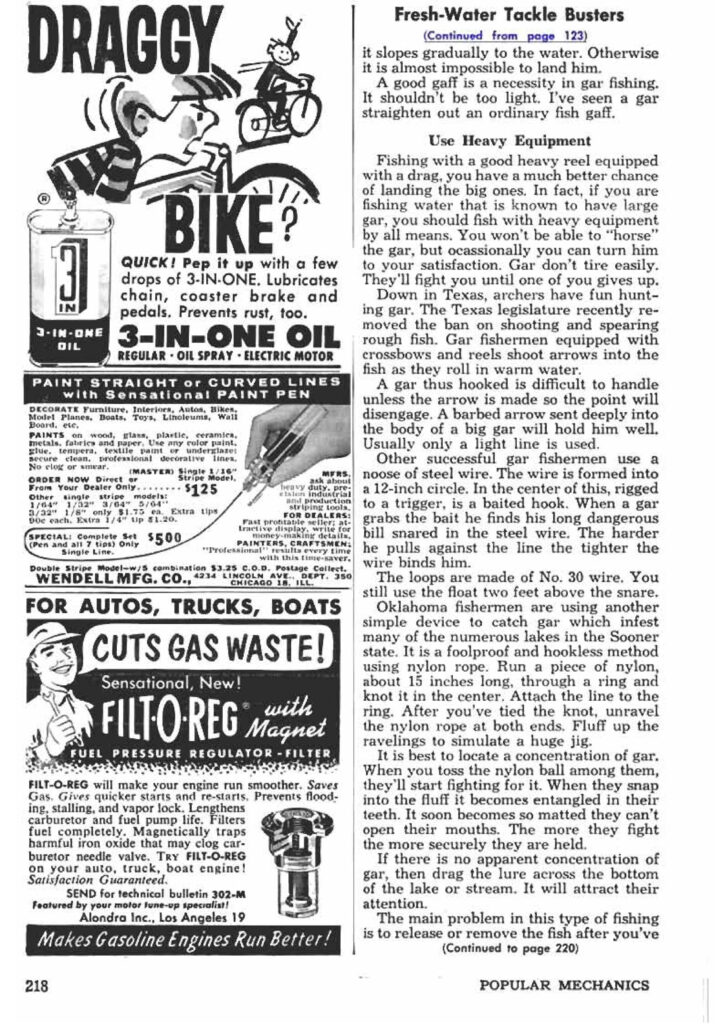
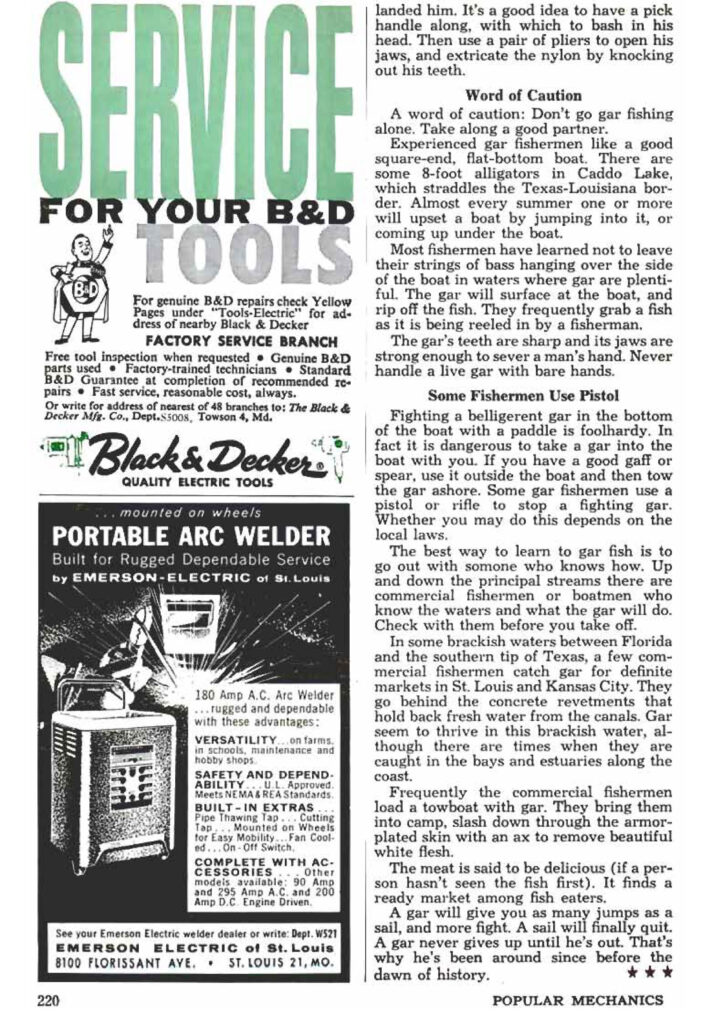
Oklahoma fishermen are using another simple device to catch gar which infest many of the numerous lakes in the Sooner state. It is a foolproof and bookless method using nylon rope. Run a piece of nylon, about 15 inches long* through a ring and knot it in the center. Attach the line to the ring. After you’ve tied the knot, unravel Ihe nylon rope at both ends. FlufT up the ravelings to simulate a huge jig.
It is best to locale a concentration of gar. When you toss the nylon ball among them, they’ll start fighting for it. When they snap into the flufT it becomes entangled in their teeth. It soon becomes so matted they can’t open their mouths. The more they fight the more securely they are held.
As you read the article, watch your blood pressure. Remember not to get too worried about the crazy stuff, the errors, or the violent methods (such as using a pistol to land a fish or bashing out teeth to free a rope lure). There’s no mention of catch and release. At that time, barely anyone even considered that an option in fishing, especially when the fish is reputed to be a dangerous monster.
Here’s how it starts:
But to help you keep your cool as you read, I’m going to spoil the ending:
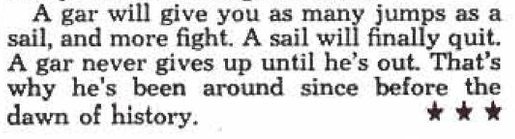
I started out with the intention of making fun of this article. The more I’ve thought about it, though, the more I’ve seen that maybe Wilke was actually doing some service to gars and gar fishing by repeatedly pointing out that it’s fun. Don’t get me wrong, he is suggesting that mutilating and/or killing them is a necessary part of it, and he does perpetuate a ton of commonly accepted nonsense that still harms gars today, but a lot more of the article is practical than I had at first appreciated through the haze of my annoyance. See what you think.

Finally, if you have a copy of this issue, please reach out. If you want to get rid of it, I’d like to have it in my collection. If you are similarly prone to collecting these things, I’d love to at least have a better quality scan of this article’s pages.


