Juvenile quillback carpsuckers on hook and line

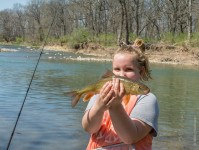
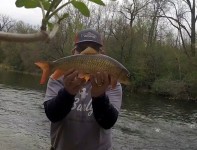
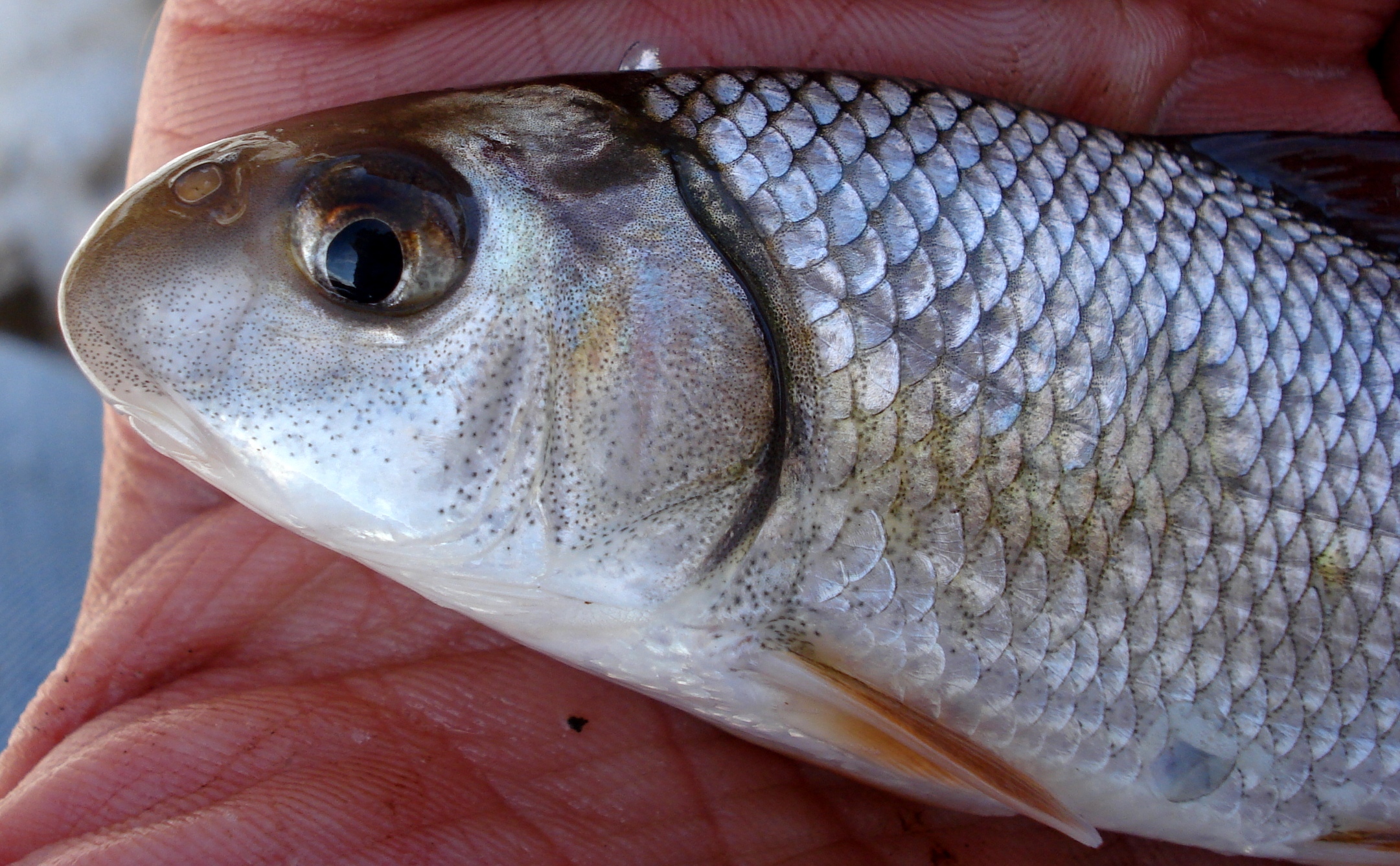
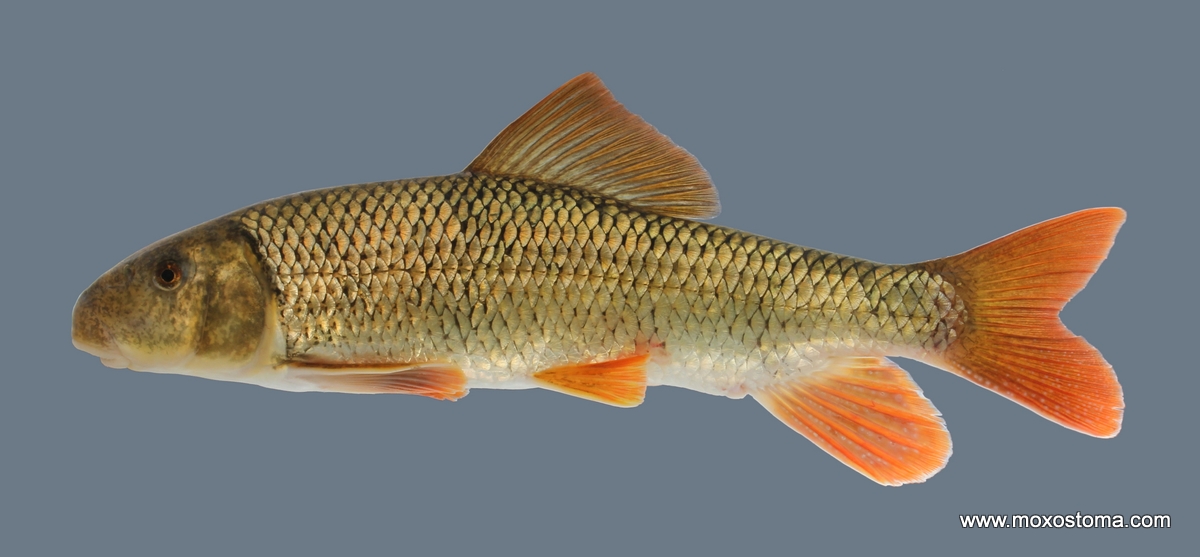
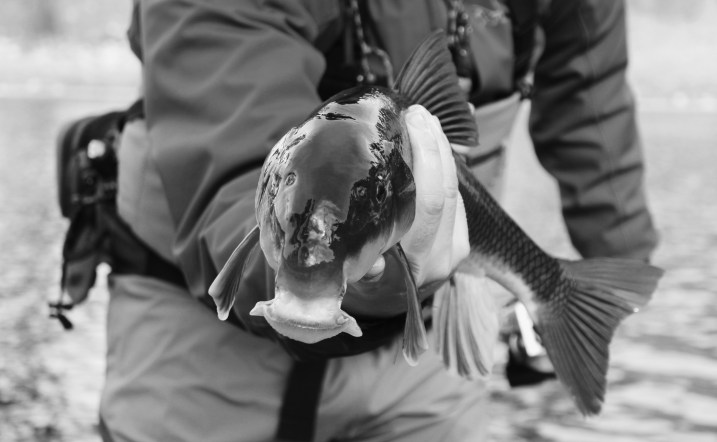
Multi-species angler Ben Cantrell managed to catch a couple of juvenile quillbacks (Carpiodes cyprinus) recently (late March, 2013), and since I have never seen any this young—in person or in photos this clear—I asked if he would let me post them here.

(Edit: Ben has since written up this story on his own blog, along with other fishing successes. Check it out for some great fish and photos: http://bencantrellfish.blogspot.com/)

These were caught in an area of no visible flow in a side channel or small creek connected to the Wisconsin River. Ben estimates the water was 18 inches deep with a temperature of about 40°F.

Ben’s description of his tactics:

There was a massive school of shiners in the channel, so thick it was difficult to see the bottom.  Every now and then I saw a flash of silver as slightly larger fish on the bottom turned on their sides, which I assumed was feeding behavior.  I was fishing with a Tanago new half moon hook and a tiny bit of nightcrawler.  The shiners would attack the bait before it could reach the bottom, so I put a bigger piece of crawler on (a piece smaller than a pencil eraser).  This allowed the bait to get past the shiners and reach the bottom.  I left the line slack and every 5 seconds gave it a pop to see if a fish was on.  This produced 2 of those juvenile quillbacks in about 15 minutes.  They were both definitely fair hooked in the mouth.  I checked the lower lip for a nipple and did not see one in order to rule out highfin or river carpsuckers.  I suppose it’s possible that juveniles of those species do not have the nipple on their lips.  However, quillback strongly outnumber the other 2 species in the lower WI River, so I’m sticking with quillback.

In fact it is possible for the nipple to be absent from juveniles of the other two species: Etnier and Starnes (The Fishes of Tennessee, 1993, pp. 264-265, full text available online) say of the quillback “This is the only carpsucker that lacks the tiny, nipple-like projection on the lower jaw, but young carpsuckers of other species may have this process absent or weakly developed, and are very difficult to identify.” These are quillbacks, however, based on scale counts. According to Becker (The Fishes of Wisconsin, p. 630, full text available online) the quillback has 36-40 lateral line scales, while the highfin (p. 638) has 33-35 and the river (p. 634) has 34-36. There are about 39 on both of Ben’s fish. There is always the possibility that young specimens of Carpiodes can be confused with young specimens of Ictiobus. Anal fin ray counts can help distinguish the two, but are not available in these photos. Based on their bright silver coloration and general appearance, and on the shape of the suboperculum (symmetrical in Ictiobus, assymetrical in Carpiodes and Ben’s fish), I don’t think there is any need to worry about these being young buffalo.

Ben estimates (based on a measurement of his hand) that these fish were about 5.8 inches long. Given the vagaries of measurement in photos, I’m arbitrarily considering them somewhere between 5.25 and 6 inches (roughly 130 to 150 mm). Becker’s growth chart shows southern Wisconsin young-of-year quillbacks, hatched in May or June, reaching an average total length of 41 mm by the middle of July and 100-110 mm by the middle of September. He writes that “in the lower Wisconsin River, age-I quillbacks are 144 (134-155) mm TL by mid-July; age-II fish average 202 mm.” (p. 632) If Ben’s fish were 130-150 mm long, and if I’m reading the data correctly, they would be products of 2012′s spawn.

Now, let me get to the point. I love fish and fish science, but I am first and foremost a fisherman. Even worse, I’m a fisherman who chooses to pursue suckers. I have to point out the most remarkable thing about Ben’s story:

“This produced 2 of those juvenile quillbacks in about 15 minutes.”

Those who do not target quillbacks may not know that they are generally very difficult to catch fairly because of their extreme skittishness, their preference for small foods (see below), and their ability to suck in and spit out a bait faster than the vibration can travel up the line to the angler’s hand. By the time the signal has traveled from the fish to the hand, then from the hand to the brain and back to the hand as an order to react, the quillback has already expelled the bait. Because of this, quillbacks are frequently snagged outside the mouth when the angler attempts to set the hook. I know fishermen of undisputed skill and expertise who have tried for years, without success, to fair hook a single quillback despite snagging many. That Ben managed two of them in 15 minutes is both remarkable and probably annoying to some others.*

On the subject of quillbacks’ culinary habits Becker writes (p. 632):

The quillback feeds freely on debris in the bottom ooze, on plant materials, and on insect larvae. According to Harrison (1950), only small amounts of indentifiable material are found in the visceral contents: 86% undeterminable debris, 12% algae, and 2% insect remains, with a trace of other invertebrates. Very small tendipedids, sometimes occurring by the thousands, were the only insects found intact in the digestive systems examined. Other insects were represented by larvae cases, detached legs, and wings. In southeastern Wisconsin (Cahn 1927), the quillback’s food consisted of fragments of aquatic vegetation and algae, occasional Chironomus larvae, and a variety of snails (Planorbis, Physa), and small clams.

Thanks to Ben for the photos and information, and for making the rest of us feel like chumps.

The following video shows a feeding quillback (starting at about 2:40, after lots of gar, cats and others) in an aquarium at the National Mississippi River Museum and Aquarium in Dubuque, IA. I keep meaning to go back and get some better quality footage. (http://youtu.be/iuVh2BWmUoQ)

*(Due entirely to dumb luck, and not at all to skill or knowledge, the first sucker I ever caught was a quillback. That was several years ago and despite seeing thousands of them since, and trying every trick in my arsenal, I have never hooked another one.)


December Redhorse Dorsal

a dorsal fin

Got out fishing in a favorite creek today, and though it’s December 2nd, for a while a long-sleeved t-shirt was too warm. For the first time in months, a sucker was caught. I’d really hoped to get one more before snow, ice and holidays derailed my fishing.

The rock bass were on fire, including one that missed becoming the new Illinois state record (1 pound, 10 ounces) by only a few ounces. Largest rock bass I’ve ever seen.

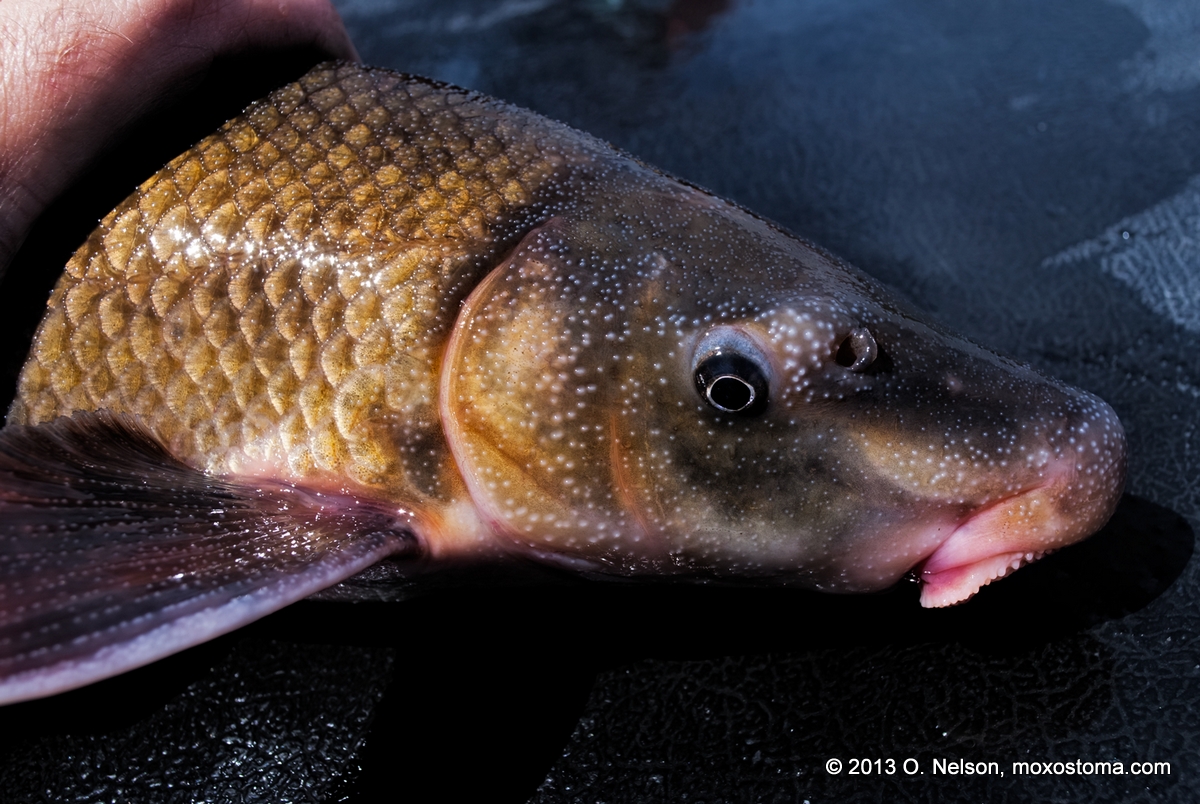
Caught: rock bass (at least a dozen), several bluegills, two green sunfish, many largemouth and smallmouth bass, a yellow bullhead and A REDHORSE! It was a golden (m. erythrurum) but with every golden there’s always the hope that it will turn out to be a black (m. duquesnei). Lateral line scale count (43) indicates golden, dorsal ray count (15) is high for a golden and at the top end for a black. Mouth could go either way, depending on how wishfully I’m thinking. But the caudal peduncle isn’t particularly skinny (if you’ll pardon the scientific jargon), and the pelvic fin ray count, as near as I can tell from the photos that show that fin, is not 10.

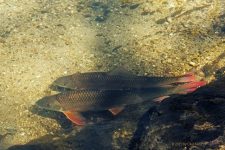
Spotted but not caught: several very large hogsuckers and one tiny one, two buffalo (not sure which species), quillbacks, many redhorses (of at least 2 species), several fairly large common carp, and innumerable minnows.

Redhorses: Shorthead, Golden, and Silver, and other fish from 2012 so far (tons of photos)

Gallery

Some of the fish I’ve caught in 2012. According to my records, I’ve hooked and landed almost 30 species this year, 9 of which are new additions to my lifelist (sauger, longnose gar, mooneye, silver carp, silver redhorse, yellow bullhead, … Continue reading

Northern Illinois Greater Redhorse, April 2012

How often do you get to meet a new fishing buddy, discover half a dozen excellent multi-species fishing spots within an hour of home, sample the fish resident in those new locations while learning a bit about handling several different types of seines, learn a bit about photo tanks and fish photography, and see and handle dozens of new fish species, including one that’s listed as endangered in the state?

Not very often.

In April I had one of those days when good planning led to an experience that exceeded the daydreams leading up to it. Click here for more, including a bunch of redhorse (and other fish) photos

Largescale Suckers on the Fly, Montana, January

The lucky SOBs highly skilled anglers over at False Casts and Flat Tires got a surprise gift from the Bitterroot River recently, and I’m jealous: a bunch of 20″ largescale suckers (Catostomus macrocheilus) and some trout to keep them busy while waiting for another sucker to bite. I can’t go home to Montana and catch fish like these now, so I’m grateful they chose to post excellent photos (and give me permission to post them here). I wonder how many fishing bloggers catch and photograph suckers and other cool fish but don’t bother to post them.

Click these to see them a little larger, but for full effect follow the links below and view them in much higher quality.

Their report: http://falsecastsflattires.com/2012/01/15/fly-fishing-is-for-suckers/

The follow-up with more sucker shots: http://falsecastsflattires.com/2012/01/19/as-requested.

There’s also a video of the day’s fishing, with a little sucker action, at Yukon Goes Fishing: http://www.yukongoesfishing.com/2012/01/cutties-are-for-suckers.html

Jealous. So jealous…

More on C. macrocheilus at fishbase and the Montana Field Guide.